
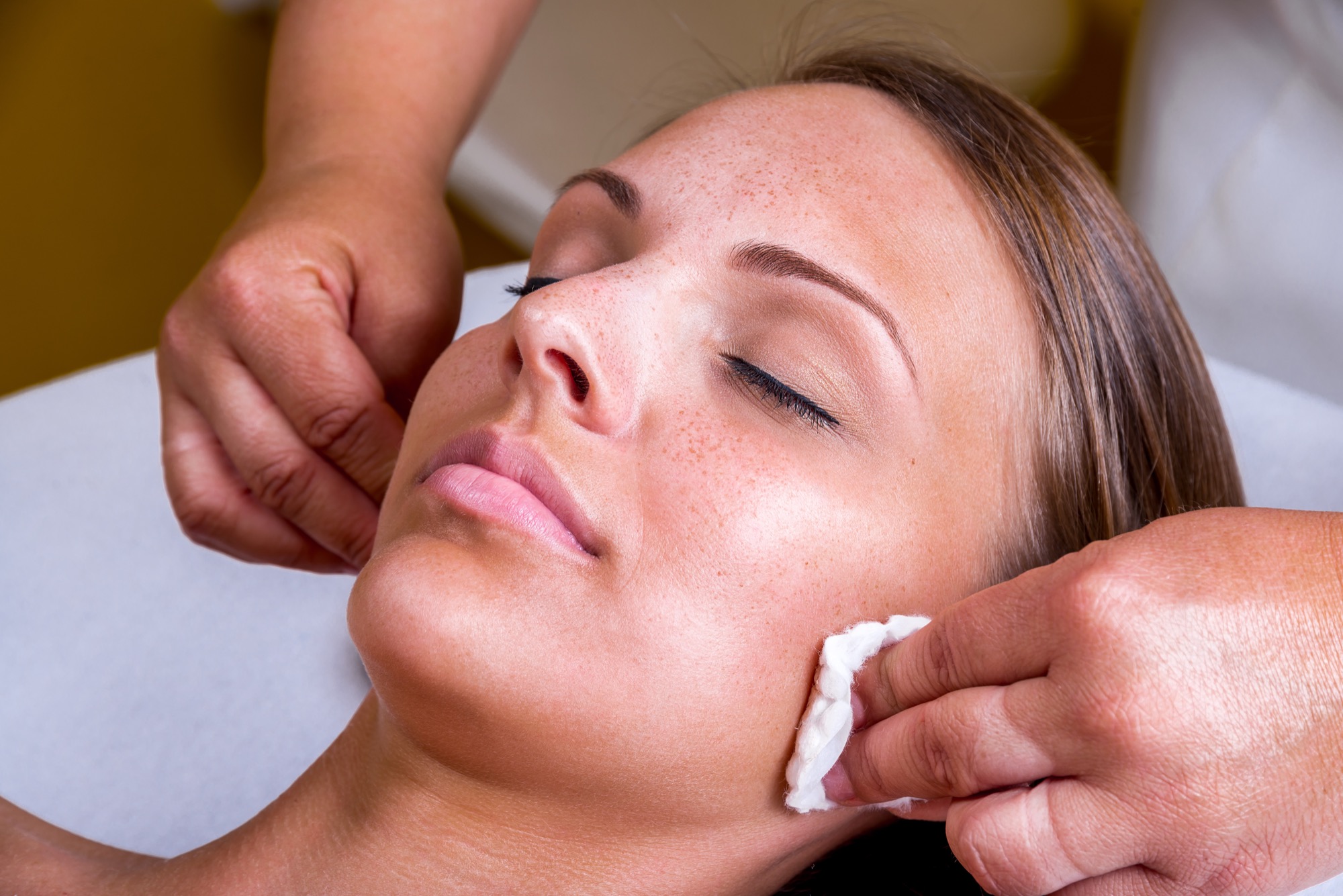
"Exfoliation" is one of those words that has quietly come to mean five different things. On a clinic menu it can point to a chemical solution, a laser, or a handpiece that buffs and infuses — treatments that share a goal (lift away the dull, damaged outer skin so fresher skin comes forward) but reach it by completely different routes. That's why "which peel should I get?" is a genuinely good question with a genuinely useful answer, and why the honest version is usually "it depends what you're solving for," not "get the strongest one."
Here's the map. The good news up front: these treatments complement each other, so it's rarely either/or.
Chemical peel — chemical resurfacing, adjustable by depth
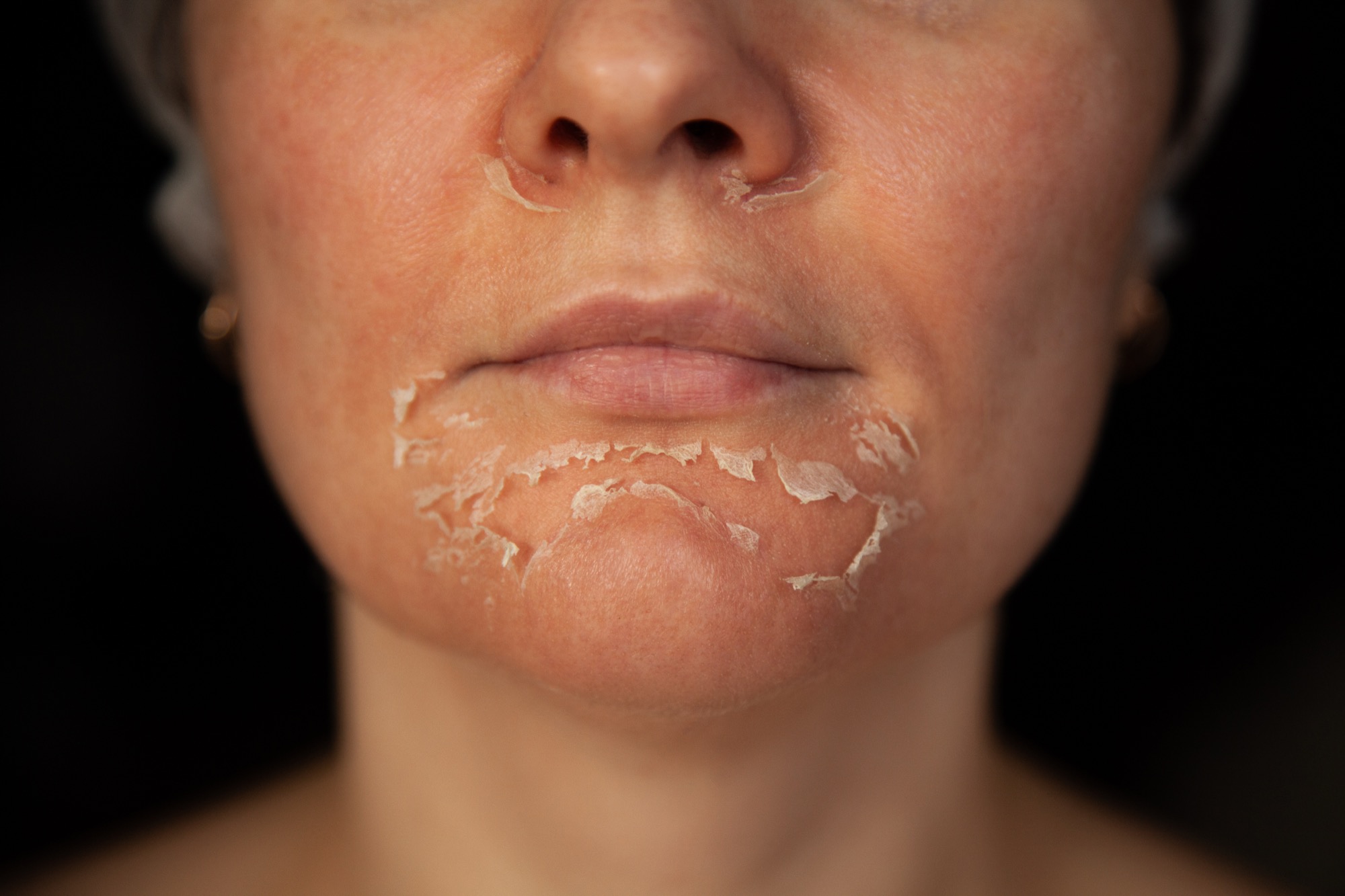
A chemical peel applies a solution that removes the damaged outer layers of skin in a controlled way, prompting the skin to regenerate. Depending on the agent and strength, a peel can be tuned from a light "lunch-break" refresh that touches only the epidermis to a deeper correction that reaches into the upper dermis, where it can prompt new collagen and elastin.[1]
That adjustability is its defining strength. Because you can dial the depth, the chemical peel is the most versatile tool for genuine correction over time — uneven pigment, sun damage, melasma, acne marks, rough texture. Deeper peels come with real downtime (the trade for reaching deeper), and they're typically done as a considered series rather than a one-off. This is the resurfacing workhorse when the goal is change, not just polish.
Carbon laser peel — laser exfoliation, essentially no downtime
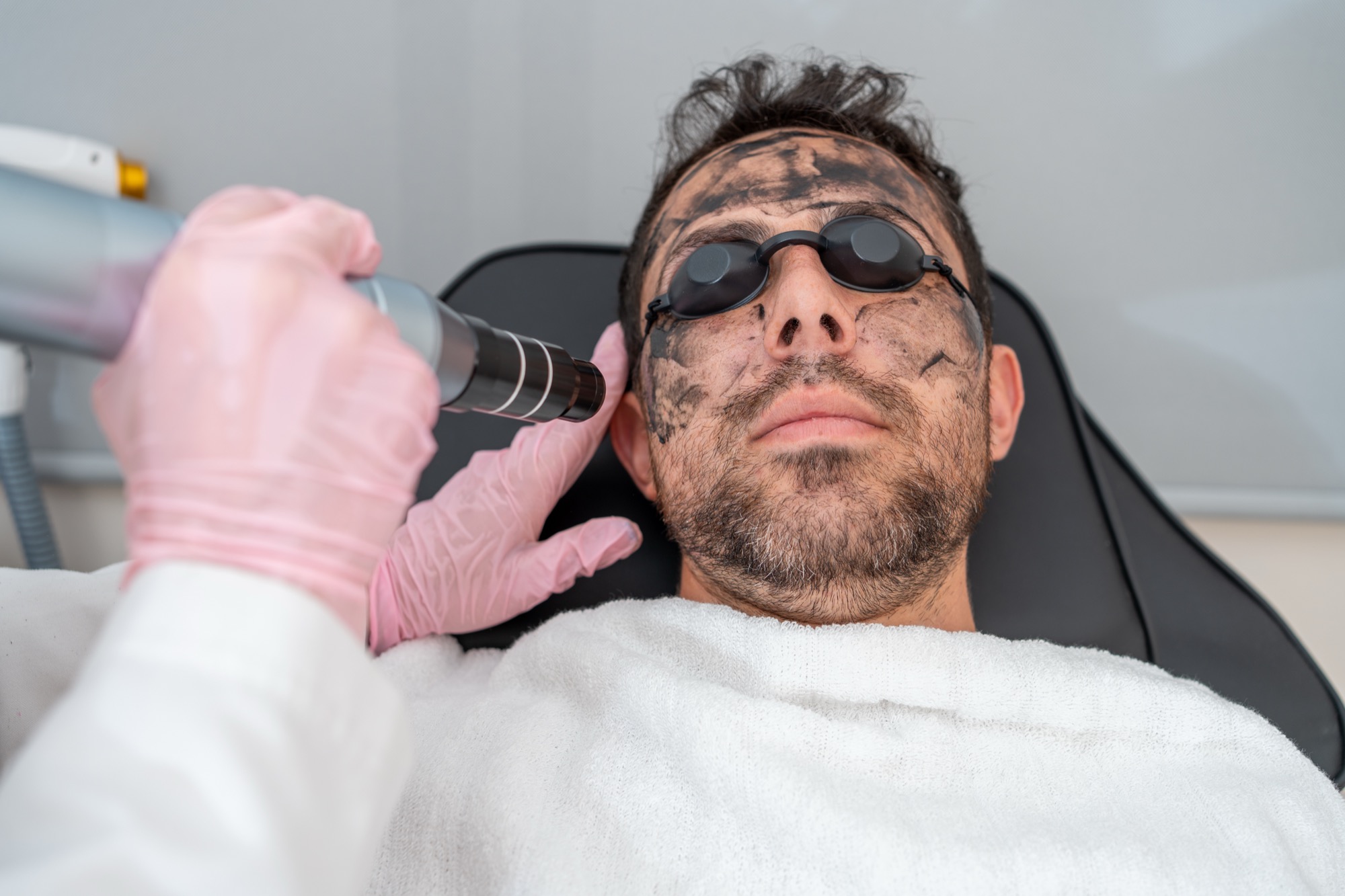
The carbon laser peel (the "Hollywood peel") takes a different route entirely: a layer of activated charcoal is applied, then a picosecond laser passes over it. The ultra-fast laser pulses shatter the carbon particles, and that shattering mechanically exfoliates the surface and clears the pores — a photoacoustic effect, not a chemical one.[2] It's frequently finished with a polishing step that clears the loosened debris and conditions the skin.
Its lane is instant, low-commitment glow — brightness, refined-looking pores, and relief for congestion and oiliness, with essentially no downtime, which is why it's a popular pre-event treatment. Where a chemical peel corrects gradually over a series, the carbon peel polishes and clears right now. One important caveat, covered in its own guide: the result depends heavily on the type of laser used, so this is a treatment where the device and the provider genuinely matter.
DiamondGlow — exfoliate, extract, and infuse
DiamondGlow is the gentlest of the three and the most "facial"-like. It combines mild physical exfoliation, pore suction, and the simultaneous infusion of nourishing serums — buffing the surface while it extracts debris and delivers hydration. It has no real downtime and a conditioning, comfortable feel.
Its lane is maintenance and hydration — keeping skin clear and glowing between more corrective treatments. Fittingly, it's often used as the finishing step of a carbon laser peel, clearing what the laser freed up and feeding the freshly exfoliated skin.
How to choose (the quick version)
Want to correct pigment, sun damage, or acne marks over time → a chemical peel.
Want instant glow and clearer pores with no downtime (great before an event) → a carbon laser peel.
Want a gentle, hydrating polish and maintenance → DiamondGlow.
Not sure → this is exactly what a consultation sorts out in a few minutes, and the answer is often a combination.
Why it's rarely either/or
Because these work by different mechanisms, they layer well rather than compete. A common rhythm: correct with chemical peels, maintain glow with a carbon peel or DiamondGlow between them. The right sequence depends on your skin, your downtime tolerance, and your goals — which is the honest reason "which one is best?" has no single answer. Best is whichever fits the job in front of you, and often it's more than one, in the right order.
If you want that mapped to your skin specifically, that's a conversation worth having before booking anything — so the plan is built around what you're solving for, not sold off a menu.
References
Samargandy S, Raggio BS. Chemical peels for skin resurfacing. In: StatPearls. Treasure Island (FL): StatPearls Publishing. Available from the NCBI Bookshelf, NBK547752.
Yi J, Hong T, Zeng H, et al. Carbon peel laser technique to improve skin quality: back to science! Plast Reconstr Surg Glob Open. 2020;8(9):e3078.