
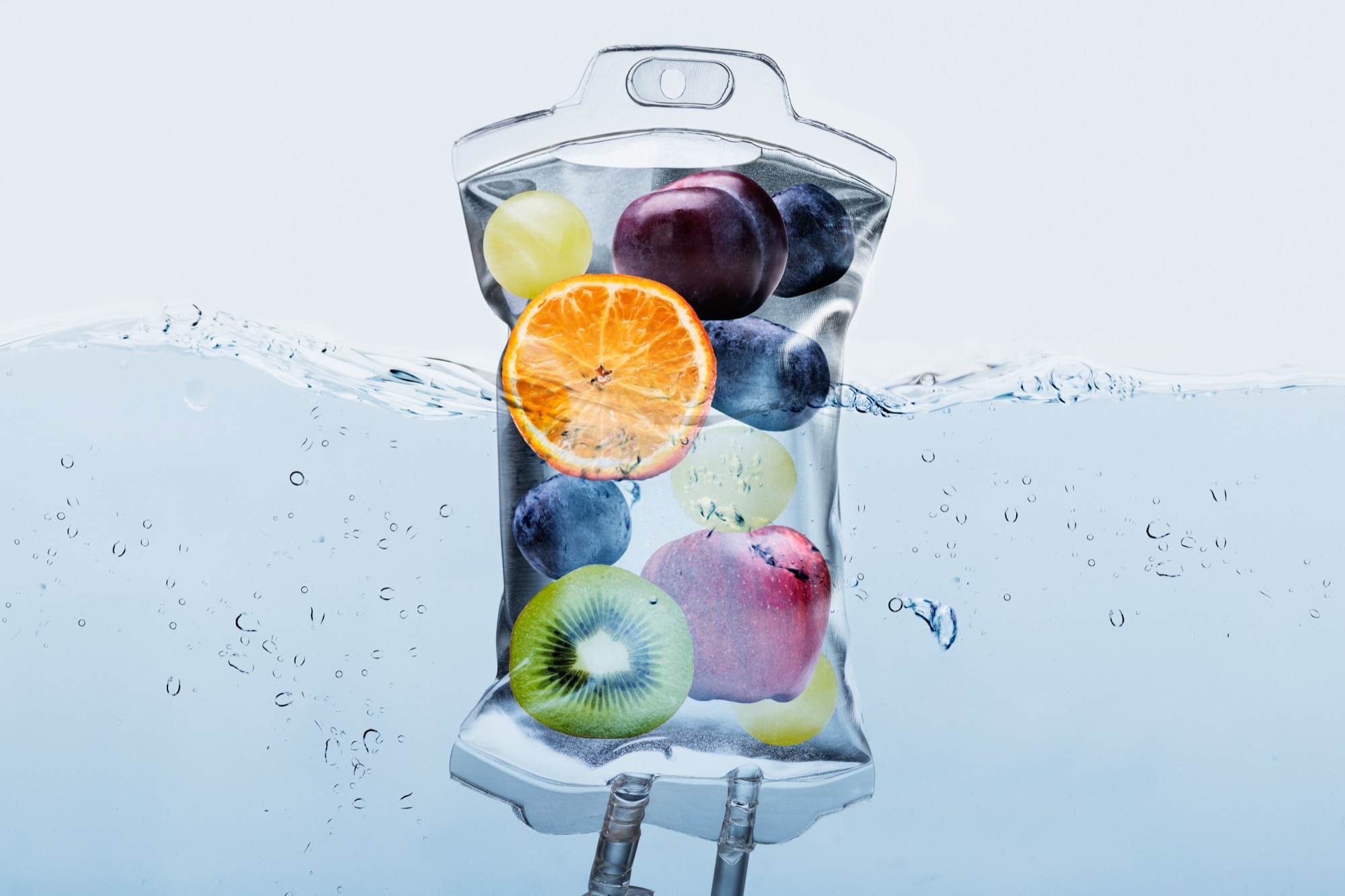
You drink water all day. You take the vitamins. And by mid-afternoon you are foggy, flat, and reaching for a third coffee that never quite lands. Somewhere in that gap between doing everything right and still feeling depleted is where the idea of an IV drip starts to make sense — and where the marketing gets loud enough to be worth slowing down for.
IV therapy has become one of the fastest-growing corners of wellness, which means it now comes wrapped in a lot of promises. This guide is the calmer version: what an IV drip actually is, the one piece of science that explains why anyone bothers with a needle, what the treatment can reasonably do, and — just as important — what it can't.
What IV therapy actually is
IV therapy — also called an IV drip, IV vitamin therapy, or IV hydration — is the delivery of a sterile solution of fluids, electrolytes, vitamins, and minerals directly into a vein. A clinician places a small catheter, and the infusion runs for roughly 30 to 60 minutes while you sit and do nothing more strenuous than scroll your phone.
The whole point sits in one word: bioavailability — how much of a nutrient actually reaches your bloodstream. When you swallow a supplement, it has to survive stomach acid and clear the gut wall before any of it reaches circulation, and for some nutrients the body simply caps how much it will absorb at once. An IV skips that entire journey.
The clearest illustration is vitamin C. In a classic study of its pharmacokinetics, researchers showed that oral vitamin C plateaus — past a certain dose the gut stops absorbing more, and blood levels hold around 70–85 µmol/L no matter how many tablets you take. Intravenous delivery bypasses that ceiling, producing plasma concentrations many times higher than the maximum achievable by mouth.[1] That difference — a hard limit on the tablet, no such limit on the drip — is the entire mechanical argument for IV therapy.
The catch worth naming early
Here is the honest counterweight, and it belongs up front rather than buried: higher blood levels are not the same thing as a better outcome for a healthy person.
For someone who is genuinely depleted — dehydrated after illness, running low on a nutrient, unable to absorb well through the gut — getting nutrients directly into circulation is genuinely useful. For someone already well-hydrated and well-nourished, pushing a vitamin far past what the body can use mostly produces expensive urine. IV therapy is a tool. Like any tool, it is valuable for the job it fits and pointless for the job it doesn't.
That is why the setting matters more than the menu.
Why "medical" is not just a marketing word
IV bars and drip lounges have opened on a lot of corners, and quality varies enormously. An intravenous infusion is a medical procedure — it deserves a medical process around it.
At a physician-led clinic, an infusion is preceded by an actual screening: your health history, your medications, and your kidney and heart function are reviewed before anything is hung, because those are exactly the systems that determine how your body handles a sudden volume of fluid and a concentrated dose of nutrients. Formulas are compounded and dosed clinically rather than poured from a fixed menu. And a good clinician will tell you when an IV isn't the right answer for what you're describing — which is not a sentence you hear at a business paid per bag.

What people actually come in for
Most IV menus are organized around a handful of real goals rather than a disease. The common ones:
Hydration. A balanced electrolyte solution restores fluid volume quickly — the most straightforward, best-understood use, and a sensible starting point after travel, illness, or heat.
General wellness and energy. The most established formula here is the Myers' Cocktail — a blend of magnesium, calcium, B-complex vitamins, and vitamin C developed by the Baltimore physician John Myers and refined by clinicians over decades. It remains the most-requested drip in nutrient therapy precisely because it is versatile and well tolerated.[2]
Immune support. Higher-dose vitamin C with zinc and B vitamins, typically reached for around demanding seasons or travel.
Healthy aging and performance. This is where NAD+ therapy sits — a slower, longer infusion aimed at the cellular machinery of energy and repair. It is the most involved drip on any menu, and the one most worth approaching with clear eyes about what the science does and doesn't yet show.
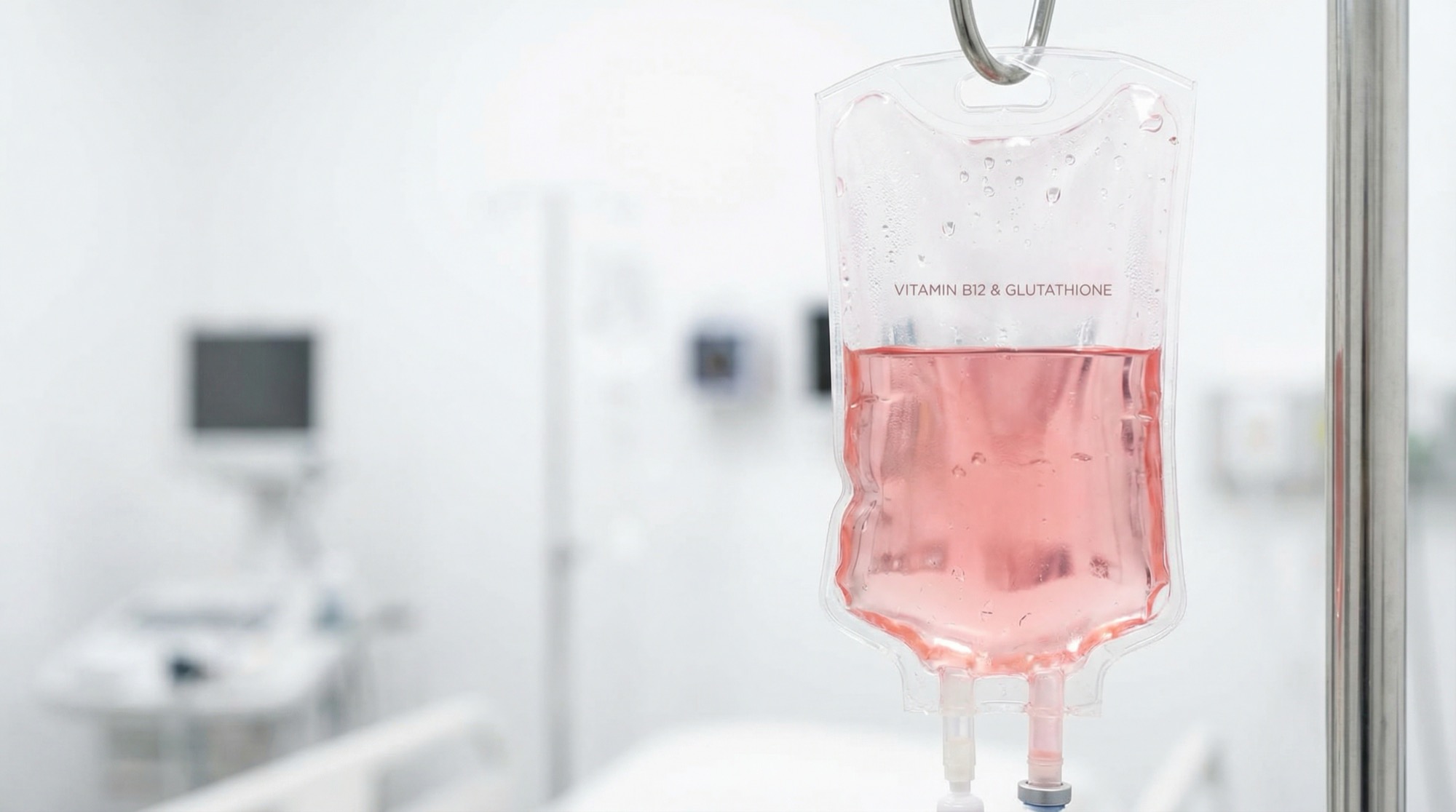
Skin, hair, and glow. Formulas built around glutathione — the body's own master antioxidant — plus vitamin C. The honest framing is "supports skin health from the inside," not a replacement for what happens on the treatment table.
What it feels like
Most people find the experience anticlimactic in the best way. After the screening, you settle into a chair, feel a quick pinch as the catheter goes in — similar to a blood draw — and then feel very little beyond a cool sensation traveling up the arm. Hydration effects can be near-immediate; energy and wellness effects, when they come, tend to arrive over hours rather than seconds. NAD+ is the exception on comfort and time: it has to be infused slowly, over 90 minutes or more, because going too fast is genuinely unpleasant.

Is it safe?
Administered by trained clinicians with proper screening, IV therapy has a strong safety profile. The common side effects are minor: brief discomfort at the insertion site, a cool feeling during the infusion, occasional bruising. The reason screening isn't optional is that a few conditions — kidney disease and heart failure among them — change how the body handles fluid and specific nutrients. Catching those beforehand is the whole point of a medical intake, and the single clearest reason to choose a clinical setting over a pop-up.
The bottom line
IV therapy is neither a miracle nor a scam. It is a legitimate way to deliver fluids and nutrients at levels the gut can't reach, most useful when your body actually needs what's in the bag, and best done somewhere that screens you first and will tell you the truth about whether you need it at all.
If you're curious whether it fits what you're feeling, the useful next step isn't picking a color off a menu — it's a conversation with a clinician who will start from your goals, not the drip.
References
Padayatty SJ, Sun H, Wang Y, et al. Vitamin C pharmacokinetics: implications for oral and intravenous use. Ann Intern Med. 2004;140(7):533–537.
Gaby AR. Intravenous nutrient therapy: the "Myers' cocktail." Altern Med Rev. 2002;7(5):389–403.